
Spiders in Newcastle Homes: Which Ones Matter and What to Do
Most spiders in a Newcastle home are harmless and useful. Here is how to tell the ones that matter from the ones to leave alone, and what a spider treatment actually does.
Key takeaways
- Redbacks are the main reason a domestic spider treatment has genuine safety value — check letterboxes, outdoor furniture and sheds.
- Funnel-web burrows sit in damp shaded garden beds; never handle one, and treat a bite as an emergency.
- Huntsmans and wolf spiders are hunters, not threats, and often indicate an underlying insect problem.
- A professional treatment targets harbourages and removes webbing; fogging a house is not the answer.
- Spiders follow insects, so reducing cockroaches and silverfish reduces the spider population.
Almost every spider in a Newcastle home is harmless, and almost every homeowner treats all of them as if they are not. The useful conversation is not "how do I get rid of spiders" — it is which ones actually matter, where they are living, and what the treatment is genuinely for.
The ones that matter
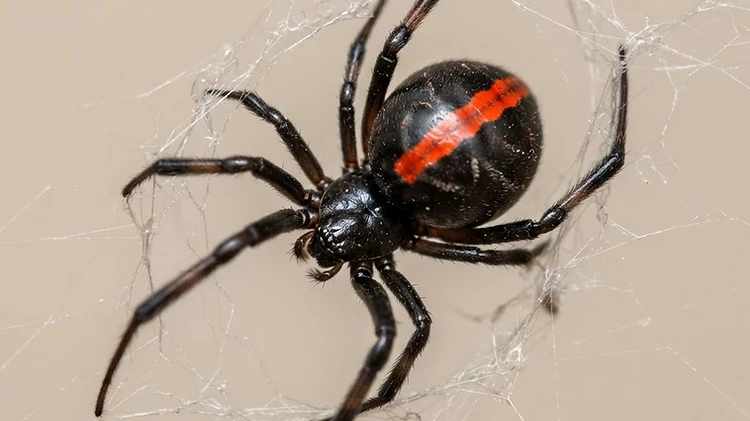
Redback spiders. Small, black, with a red stripe; found in dry sheltered spots — under outdoor furniture, in the weep holes of brickwork, inside letterboxes, behind the BBQ, in the shed under the bench. The bite is painful and can be serious for children and older people. They are the main reason a spider treatment has real value.
Funnel-web spiders. Large, dark, glossy, with a very hard carapace; burrows in damp shaded garden beds with silk trip lines. Rare in suburban Newcastle but present in the broader region. Never handle one; a bite is a medical emergency.
Wolf and huntsman spiders. Large, fast, and alarming to live with, but not dangerous. They are hunters, and a huntsman indoors has often walked in looking for other insects — a sign worth noting rather than ignoring.
White-tailed spiders. Grey-brown, with a pale band at the tail; often found in bedding or clothing left on the floor. The bite can cause local pain and redness, and occasionally a persistent sore, but it is not the necrosis story the internet repeats.
Garden orb weavers. Large webs across paths and eaves, mostly an aesthetic nuisance, beneficial for mosquito control.
Why there are so many
Spiders follow insects. A house with plenty of cockroaches, silverfish and clothes moths has more spiders than an identical house next door — the spiders are eating the residents.
They also follow structure. Redbacks need dry shelter with a bit of clutter: pot plants, garden edging, timber stacks, the space under the house, the corner of the garage. Both are things you can change.
What a spider treatment actually does
Professional spider work is mostly a surface and harbourage treatment, not a fogging exercise:
- Exterior: eaves, fascia, window frames, garage interior, fence palings, shed and outdoor furniture, weep holes and cavities.
- Interior: the corners, skirting and ceiling junction where webbing spiders sit; not an indiscriminate room spray.
- Harbourages: under the house, behind shed shelving, inside the letterbox, around water tanks and pool equipment.
- Web removal: physical webs removed on the day, because dead spiders do not remove webs and the sight of cobwebs is what most people are actually reacting to.
Residual control for webbing spiders typically holds for several months, which is why a spring treatment before the season builds is more effective than a summer reaction.
Living with the harmless majority
Removing every spider from a garden is neither possible nor desirable — they are doing useful work. Practical reduction looks like this:
- Knock webs off eaves and windows fortnightly rather than waiting for an accumulation
- Wear gloves and shoes when moving pots, firewood and stored goods
- Shake out shoes, gloves and garden clothing before putting them on
- Keep the shed bench clear and the under-house space free of stored clutter
- Reduce the insect supply: fewer silverfish and cockroaches means fewer spiders
- Check outdoor furniture, letterboxes and play equipment monthly for redbacks, particularly with children around
When to call
Call for redbacks around play equipment, outdoor furniture or a letterbox; for a suspected funnel-web burrow near the house; for a persistent indoor population of webbing spiders following an insect problem; or before a sale or inspection where the visible webbing will be noted.
If you have found a large dark spider in the laundry and you are not sure what it is, put a jar over it first — identification before action is the whole point.
If someone is bitten
For a redback or other significant spider bite, apply a cold pack to reduce pain, keep the person still, and call the Poisons Information Centre on 13 11 26 or 000 if symptoms are developing — nausea, sweating, or pain spreading beyond the bite site.
For a suspected funnel-web bite, call 000 immediately, keep the patient still, apply a pressure immobilisation bandage to the limb and do not remove it. Do not cut, suck or apply heat to any spider bite.
For the common garden and house spiders, wash the area, apply a cold pack and watch for spreading redness or systemic symptoms. Photograph the spider if you can do so safely, because identification changes the advice.
Spider-proofing the outdoor areas
The species that matter live outside, so prevention is mostly an outdoor job:
- Letterboxes. Redbacks favour them. Wear gloves when emptying, and check monthly.
- Outdoor furniture and play equipment. Check underneath and inside tubular frames before children use them after a period of storage.
- Sheds and garages. Keep shelving off the wall by a hand's width, store goods in sealed plastic rather than cardboard, and clear the bench.
- Under the house. Dry, undisturbed and often forgotten — the single best harbourage on the property.
- Garden edging, sleepers and rock walls. Preferred burrow sites for ground-dwelling species; keep them clear of doorways and play areas.
- Footwear and gardening gloves. Stored outside, they are the classic bite location.
- Pool equipment and water tanks. Damp, sheltered and rarely disturbed.
Treating a yard without harming the useful spiders
Garden orb weavers and the small hunters in the veggie patch are doing the work you want done. A sensible treatment targets the building envelope, the harbourages around it and the structures people use — not broadcast spraying over a whole garden.
That distinction also protects the beneficial insects that keep the mosquito and aphid populations down, which is one reason we ask what a customer actually wants before mixing anything.
What we ask before treating
Three questions decide the plan: which species, where the webs or burrows are, and who uses the space. A redback under a trampoline and a redback in a shed that is opened twice a year need different urgency. A house with a toddler needs the play equipment and sandpit treated first, and a chat about what to check monthly.
We also ask what the customer has already sprayed. Retail spider spray applied to eaves makes webbing spiders rebuild slightly lower, which usually looks like failure and is worth undoing rather than adding to.
The webbing that appears overnight
The webs that seem to materialise across a doorway or along a fence line in a single night are usually orb-weavers and their relatives, and they are the least concerning spiders on the property.
They build where insects fly, which is why they appear across paths, between shrubs and under eaves. They rebuild after rain because the silk does not survive it, which is why the effort feels futile. Treating a garden to remove them also removes the predators doing useful work.
What is worth doing is managing light and vegetation. A sensor light left on all night draws moths, which draws weavers. Shrubs brushing the fascia give them anchor points and a route indoors. Cut the contact and most of the webs stop appearing where you walk.
Funnel-webs and the ones that change your habits
Sydney funnel-web spiders are found in the Hunter, and they are the one group where the response should be immediate rather than annual.
They favour cool, sheltered, damp places: under rocks, in retaining wall cavities, around the base of a shed, among stacked pavers, in dense ground cover. A male wandering on a warm, humid evening in summer is the classic encounter, and it is the encounter that ends in hospital.
If you find one, do not spray it and do not try to catch it in a jar. Keep people and pets away, and get a technician to treat the harbourage properly, including the void behind it. Where a property has a known population, the sensible response is an annual look in spring, before the males start moving.
The bites that need medical attention
Most spider bites in Australia cause local pain and nothing more, and the majority of "spider bites" turn out to be insect bites, minor infections or something else entirely.
The exceptions are clear and worth memorising. A funnel-web bite needs pressure immobilisation and an ambulance. A redback bite causes significant pain that builds over an hour and may need hospital assessment, particularly for children. A mouse spider warrants the same response as a funnel-web until identified.
For everything else: clean the area, apply a cold pack, and watch for signs of infection over the following days. If a bite becomes hot, spreading or accompanied by fever, that is a medical matter rather than a pest matter.
White-tails, huntsmen and the myths worth dropping
White-tailed spiders are the most over-feared spider in Australia and the least understood.
They hunt other spiders rather than building webs, which is why they turn up inside: they follow the prey. They are not aggressive, their bite is not the tissue-destroying event the internet insists on, and the association with necrotic ulcers has been examined repeatedly without being supported.
Huntsmen are the other perennial question. They are large, fast and harmless, and they eat cockroaches. A huntsman in a house is arguably pest control doing its own work.
The useful response to both is the same: reduce the prey. Fewer cockroaches and fewer webbing spiders inside means fewer hunting spiders following them in. Sealing the gaps they use — under doors, around windows, through the roof space — does more than any spray aimed at the spider itself.
Why the treatment has to include the outside
Spider treatments fail when they are confined to the interior.
Most of the population lives outside, in the garden, under the eaves, in the fence line, in the shed and around the windows. An internal-only treatment kills what happens to be inside on the day and leaves the source untouched.
A proper treatment covers the exterior perimeter, the eaves line, window and door frames, the fence line, the subfloor and the roof void, and it targets both the spiders and the insects they feed on. That is why a spider treatment that is done properly lasts considerably longer than a spray along the skirting boards.
Garden spiders and the neighbours who complain
Spiders are the one pest where a treatment can make you unpopular, because the webs on a fence line are often the neighbour's conversation starter.
Orb-weavers in a hedge, weavers across a side path, redbacks under a letterbox or in the kids' bike helmets. The last of those is worth attention: a redback in a stored helmet or boot is a genuine hazard, and it is a five-minute check rather than a treatment.
Where a fence line or garden bed is the source, the honest advice is that removing every web in a suburb's worth of vegetation is neither possible nor useful. Reducing the insect population with a perimeter treatment, cutting back the vegetation that gives anchor points, and clearing the sheltered spots where redbacks establish does most of the work. Repeat annually before summer, not monthly.
Stored shoes and gloves
Redbacks live in sheltered, dry, undisturbed cavities: boots, gardening gloves, the box of shoes by the back door, the kids' bike helmets. Shake and check before wearing anything that has sat outside for a season. It is the most common redback encounter there is, and it is entirely preventable.
The shed
A shed with stored timber, boxes and a gap under the door is the single most reliable redback habitat on a suburban block. Clear the floor, seal the base, and check behind stored items a few times a year.
How Accurate Pest Control can assist
We will identify what you have, treat the harbourages that matter, remove webbing and tell you which spiders to leave alone — no fogging a house over a huntsman.
- Spider control — species and behaviour detail
- Pest identification tool — score what you found
- General pest control
- Pest proofing
- Get a free quote
Frequently asked questions
Written by
Gary Paras
Founder & Senior Pest Management Technician
Gary Paras is the founder of Accurate Pest Control and leads its termite and building inspection work across Newcastle, Lake Macquarie, Port Stephens, Maitland, the Hunter Valley and the Central Coast. Over more than 20 years he has inspected thousands of Hunter homes, from lakeside cottages and coal-town miners' cottages to new-estate slab homes, and specialises in diagnosing termite activity before it reaches structural timber. He writes the practical pest guidance published here, based on what he and his technicians actually find on site rather than generic advice.
- NSW Pest Management Licence 5080776
- Building Consultant Licence BC499
- Fully Insured Public Liability
- 20+ Years Experience — founded 2005
Keep reading


Fleas in the House: Why One Treatment Rarely Ends the Problem
30 October 2026
Read article

Silverfish: Damp, Paper and the Slow Damage in the Dark
30 October 2026
Read article

Bed Bugs: How to Confirm Them, Prepare Properly and Clear Them
30 October 2026
Read article