
Strata and Property Management: Coordinating Pest Control Across a Building
Cockroaches travel shared cavities and termites ignore lot boundaries. How owners corporations and property managers should scope, notify and record a building-wide program.
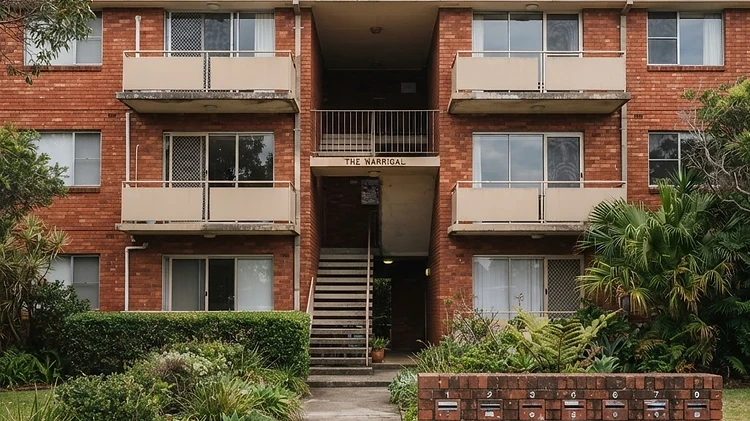
Key takeaways
- The owners corporation is responsible for common property — bin rooms, stairwells, car parks, roof voids and the structure.
- Shared wall cavities, risers and roof voids mean a lot-by-lot approach just moves pests along the corridor.
- Batch access across units: one building-wide program is cheaper and more effective than separate visits.
- Keep a building pest file of reports, monitoring maps and chemical records for the committee.
- An annual building-wide termite inspection, with findings separated into common property and lot, is the practical standard.
In a strata building, the pest problem is almost never confined to the lot that reported it. Cockroaches move along shared wall cavities, rodents travel the full length of a roof void, and termites do not observe the boundary between common property and private lot.
That makes pest control a building-management question, not a lot-by-lot one.
Common property versus lot: who is responsible
In NSW, the owners corporation is responsible for common property — the structure, roof, shared walls' outer surfaces, common areas, bin rooms, stairwells, car parks and services. An owner is responsible for their lot's interior.
In practice:
- Cockroaches in a bin room, stairwell or common laundry are an owners corporation matter.
- Cockroaches inside one kitchen may still originate from common property, and the treatment usually needs both.
- Rodents in a roof void are usually common property, and the whole void needs treating, not one ceiling.
- Termites are the complicated one: the termite management system is often common property, and an annual inspection should cover the building, not individual units.
The practical answer is a building-wide program, approved by the strata committee, with a scope that names common areas and offers lot interiors as an addition.
Where pests move between units
In a strata building the treatment boundary rarely matches the pest's boundary.
- Item 1.Shared wall cavities and floor penetrations
The gap around plumbing stacks and conduit between floors is a continuous route.
- Item 2.Common property bin rooms and chutes
Warm, food-rich and rarely on a cleaning roster — the usual source of cockroach pressure.
- Item 3.Ceiling and roof void
Continuous across townhouses and apartments; rodents and possums move the full length of the block.
- Item 4.Subfloor and basement car parks
Damp, dark and connected to garden beds through service pits and drainage.
- Item 5.Shared laundry and storage cages
Cardboard storage in a humid room is both harbourage and food for pests.
- Item 6.Landscaping against the slab
Garden beds and hedging planted hard against the building by a landscaper, not an arborist.
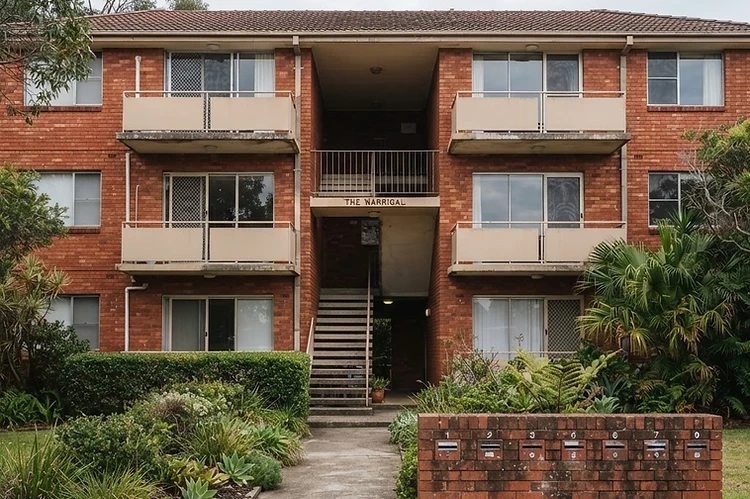

Where multi-unit buildings fail
- Bin rooms and chutes. Warm, food-rich, and on a cleaning roster that is often weekly at best. The single most common source of cockroach pressure in an apartment building.
- Roof voids. Continuous across the block; possums, rats and birds move between fire compartments through gaps that should have been sealed.
- Basement car parks. Damp, dark, with garden beds and drainage pits connected to the outside.
- Storage cages. Cardboard, old furniture and Christmas decorations in a humid basement — harbourage and food in one.
- Landscaping against the slab. Hedges and garden beds installed hard against the building, bridging any termite barrier.
- Service penetrations. Plumbing and electrical risers are continuous shafts, and rarely fire- or pest-sealed.
Coordinating a program across a building
- Scope by area, not by lot. Common areas first, then offer lot interiors as an opt-in or a building-wide package.
- Notify residents in writing with the date, the areas, access requirements and the re-entry time.
- Batch the access. Doing 24 units in one building over two days is cheaper and more effective than 24 separate visits.
- Keep a building file. Every service report, monitoring map and chemical record, held by the strata manager and available to the committee.
- Termite inspections annually. One inspection of the building and its perimeter, with a report that distinguishes common property from lot findings.
- Fix the building, not just the pests. Door seals, chute cleaning, bin room washdowns and clearing storage cages do as much as any treatment.
For property managers and landlords
The same logic applies to a rent roll. A pest history per property prevents disputes: when a tenant reports cockroaches, a record of the last treatment and its findings settles the "was it me?" question quickly.
For a rental, a documented treatment report that distinguishes structural issues from housekeeping is the most useful document you can hold, because it decides who pays.
A one-page scope that works
Most strata disputes over pest control are scope disputes. A one-page scope removes them:
- Common areas named explicitly: bin rooms and chutes, stairwells, lobbies, laundries, car parks, storage areas, roof voids
- The pests in scope: cockroaches, rodents, ants, spiders — and termites handled as a separate inspection line
- Frequency, access arrangements and notice period
- What is excluded: lot interiors, balconies, private courtyards
- The reporting format and who receives it
- The termite inspection line, if the committee wants one
That document is what a committee approves, and it is what a new manager inherits six months later.
Termites in townhouse and villa complexes
Termite management in a complex is harder than in a house because the buildings share walls, and a barrier on one dwelling can stop where the next begins. Three practical points:
- Inspect the buildings and the shared landscape together. Garden beds, retaining walls and common fences are the bridges.
- Keep a site plan of the installed systems — which townhouse has what, installed when, and where the barriers are.
- Treat findings as a building matter where the activity is in a shared wall or common landscaping; treating one lot leaves the colony in place.
Tenant and resident communication
Access is the biggest cause of a failed treatment visit. A short notice template that states the date, the time window, what to clear, and the re-entry time gets a far better response than a note saying "pest control Thursday".
For tenants in particular, say what the treatment covers and what it does not — it prevents the "they sprayed and nothing happened" complaint that follows a treatment aimed at common property while a lot interior stays infested.
When a committee should act immediately
Not every report needs a committee meeting. Three findings justify urgent action without waiting for the next scheduled meeting: German cockroaches in a bin room or chute with activity spreading to a stairwell, rodents in a roof void above living areas, and live termites in a shared wall or common landscaping.
In each case the cost of six weeks of delay is greater than the cost of the treatment, because the population compounds and the affected lots multiply.
Budgeting across a financial year
Most committees prefer a predictable annual figure to reactive approvals. A practical structure bundles the scheduled common-area services, the annual termite inspection and a small contingency for one-off after-hours work into a single line item, rather than approving each visit separately.
That also removes the delay that makes small problems expensive: a bin room treated in week one costs a fraction of the same problem treated after it has spread to three floors.
The lot register: mapping where each issue starts
Every building repeats the same pattern. The same three or four stack configurations produce problems, the same bin room services them, and the lots above the ground-floor tenancies take the consequences.
A lot register is a simple document. One row per lot, listing the level, whether the lot sits above the bin room, whether it has an air-conditioning condensate drain, whether it has been treated in the last three years, and whether access was granted at the last inspection. It takes an afternoon to build and it changes how the committee makes decisions, because the pattern stops being anecdotal.
We build one for every complex we manage. When a lot reports roaches in March, the register tells you whether the two neighbouring lots had the same issue in September, which suggests the source is in the riser rather than in the kitchen. That is the difference between treating a symptom four times a year and fixing the cause once.
Access, notice and the reality of the dining table
The technical part of a building program is easy. Access is what makes it succeed or fail.
NSW strata rules require reasonable notice for access to a lot, and residents are entitled to be told what is happening and why. What is not always clear is how much depends on the resident being home. In practice, a program that requires every resident to be present for a two-hour window will reach about half the building. A program that offers a morning where two technicians work floor by floor, with the OC arranging keys or escorts in advance, reaches nearly all of it.
Two practical points. Where a bathroom or kitchen needs treatment under the sink or along a kickboard, access is worth arranging properly rather than forcing a cabinet open. And where a resident genuinely will not grant access, the process for that is the OC's, not the technician's. We document the attempted visits and let the property manager handle it, because a technician overstepping on a doorstep is how a building program loses the cooperation it depends on.
Termite barriers in complexes: who pays for what
This is the question that generates the most friction, and the answer usually sits in the plan rather than in the legislation.
Broadly, the owners corporation is responsible for common property — the structure, the outer walls, the roof, and any barrier element that serves more than one lot. An owner is responsible for their lot. In a townhouse or villa complex where the building forms part of the lot property, the boundary of responsibility can sit in a different place entirely, and strata schemes that were registered before or after certain amendments can differ in what they include as common property.
What that means practically is that before you quote major termite work, someone needs to read the strata plan and the by-laws, not guess. A barrier along a shared dividing wall can be a genuinely divided cost. A barrier that only protects one lot's internal structure is usually that owner's.
The worst outcome is a committee assuming the OC covers everything and discovering mid-job that half the work is on owners' title. That usually happens after work is authorised and stops the whole program while invoices are argued.
What a useful report contains
A report that says "treated common areas, no activity noted" is not a report. It is a receipt. It tells the committee nothing about the building's condition and gives them no basis for a budget decision.
What should be in a report for a strata building: each area visited and whether it was accessible, the specific findings per area with photographs, any area where access was refused or blocked, the condition of bait stations and whether the housing is serviceable, termite evidence with a location description a stranger could find, recommendations split into immediate, monitoring and capital, and a plain statement of what was not inspected and why.
The final item is the one that protects a committee. An inspection is a visual assessment of accessible areas. If a subfloor is blocked by stored goods or a barrier is buried under paving, that needs to be on the record, both for the committee and for anyone reading the file later. It is not a disclaimer, it is an accurate description of scope.
Where the money actually goes
Committees tend to think of pest budgets in two buckets: the regular contract and the occasional emergency. In practice a building's spend splits into four predictable lines, and knowing them makes a levy discussion much easier.
Routine servicing of common areas, which is largely fixed. Bin room and chute cleaning, which varies dramatically with how the waste contract is structured and whether residents use bags properly. Reactive lot treatments, which spike whenever a riser problem is left unaddressed. And capital work, typically barrier renewal or drainage correction, which arrives every decade or two and should be in the ten-year plan rather than paid for by special levy in a hurry.
Buildings that spend least over five years are almost never the ones with the cheapest contract. They are the ones that spent on cleaning and drainage early, and kept reactive work low as a result.
For a committee putting together a ten-year plan, that ordering is the useful insight: the cheapest years follow the year you spent on the boring things, not the year you negotiated the lowest service fee. Cheap servicing on a wet, badly drained building is a false economy that shows up two budgets later in drainage rectification and barrier renewal.
How Accurate Pest Control can assist
We work with strata managers, committees and property managers across Newcastle and the Hunter, with building-wide scopes, resident notification templates and a single consolidated report.
Frequently asked questions
Written by
Gary Paras
Founder & Senior Pest Management Technician
Gary Paras is the founder of Accurate Pest Control and leads its termite and building inspection work across Newcastle, Lake Macquarie, Port Stephens, Maitland, the Hunter Valley and the Central Coast. Over more than 20 years he has inspected thousands of Hunter homes, from lakeside cottages and coal-town miners' cottages to new-estate slab homes, and specialises in diagnosing termite activity before it reaches structural timber. He writes the practical pest guidance published here, based on what he and his technicians actually find on site rather than generic advice.
- NSW Pest Management Licence 5080776
- Building Consultant Licence BC499
- Fully Insured Public Liability
- 20+ Years Experience — founded 2005
Keep reading


Fleas in the House: Why One Treatment Rarely Ends the Problem
30 October 2026
Read article

Silverfish: Damp, Paper and the Slow Damage in the Dark
30 October 2026
Read article

Bed Bugs: How to Confirm Them, Prepare Properly and Clear Them
30 October 2026
Read article