
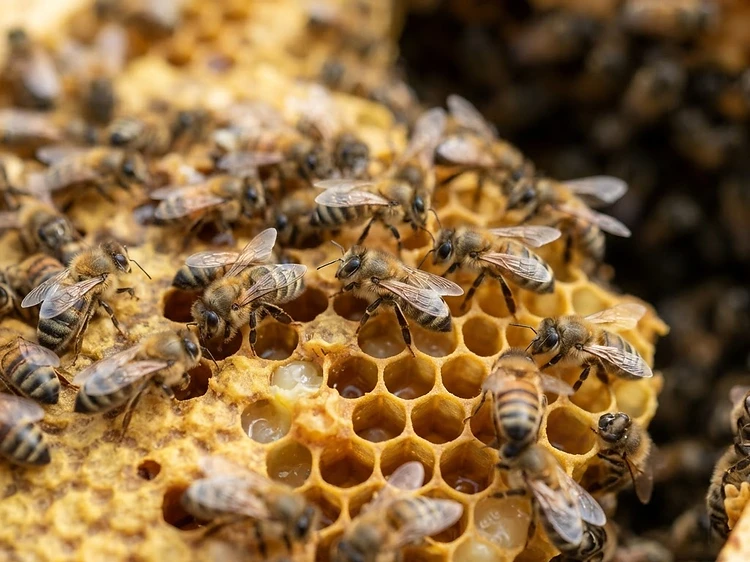
Signs You Have Bees
- A large cluster of bees hanging from a branch, fence or post (a swarm)
- Continuous bee traffic in and out of a wall cavity, chimney or roof void
- Buzzing sound from within wall cavities or ceilings
- Honey staining or odour from walls or ceilings in hot weather
- Wax comb visible at vents or gaps in exterior walls
Why Bees Become a Problem
Established bee hives in wall cavities and roof voids produce large amounts of honey and wax that can melt in hot weather, causing staining, odour, structural damage and attracting other pests. Swarms are generally docile but established hives defend their colony when disturbed.
Where We Commonly Find Them
- Wall cavities
- Roof voids and ceilings
- Chimneys
- Tree hollows near the house
- Under eaves and in roof voids
- Water meter boxes and cavity walls
How We Inspect for Bees
We assess whether you have a temporary swarm (a resting cluster looking for a new home) or an established hive, identify the entry point, and determine whether relocation by a beekeeper is feasible based on the hive location.
How Bees Treatment Works
Where possible we arrange relocation with a local beekeeper. When a hive is established in an inaccessible wall cavity or roof void and relocation is not feasible, we treat to eliminate the colony, then advise on removing honeycomb and wax to prevent re-colonisation and staining.
Areas We Treat
- Hive entry points
- Wall cavities and roof voids where established hives are confirmed
- Entry gaps are then sealed to prevent re-colonisation
How Long Treatment Takes
A bee assessment takes 20–30 minutes. Swarm relocation is typically arranged within 24–48 hours. Established hive treatment takes 45–90 minutes plus a follow-up to remove comb if required.
What to Do Before Treatment
Do not disturb the bees or block entry points, keep family and pets away from the flight path, and close windows near the hive. If you are allergic to bee stings, stay indoors and contact us urgently.
What to Do After Treatment
Stay away from the treated area for 24 hours, do not seal the entry point immediately (dead bees and odour need to dissipate), and arrange removal of honeycomb from accessible cavities to prevent re-colonisation.
When Follow-Up Treatment May Be Required
A follow-up is recommended to remove honeycomb and wax from accessible cavities and seal entry points, preventing honey damage and re-colonisation by a new swarm.
Bees Treatment Cost
Bee relocation cost depends on whether a beekeeper can safely remove the swarm or hive. Treatment of established hives in wall cavities is priced based on complexity and comb removal.
Prevention Advice
- Seal gaps in exterior walls, roof eaves and chimneys before spring swarm season
- Install mesh screens over vents and weep holes
- Check for and remove old comb from previous hives in cavities
- Do not leave sugary food and drinks outdoors in bee season
- Address water sources that attract bees, such as leaking taps and pools
Why Choose Accurate Pest Control?
We are a licensed Newcastle pest control business with local expertise in bees treatment. We identify the species, tailor the treatment, and provide prevention advice to keep them from returning.
Bees Control Across Newcastle & the Hunter
We provide bees treatment across Newcastle, Lake Macquarie and Port Stephens. View our service areas.