
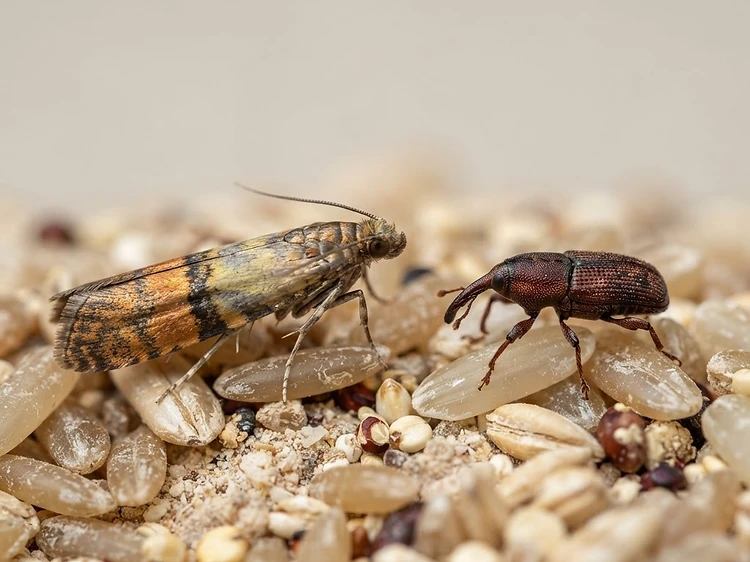
Signs You Have Stored Product Pests
- Small moths flutterting in the pantry or kitchen, particularly at dusk
- Webbing or silken threads in flour, cereals and grain products
- Small beetles or larvae crawling in packets of rice, flour or cereal
- Tiny holes in packaging or fine dust around stored food
- Larvae in pet food, bird seed or dried fruit
Why Stored Product Pests Become a Problem
Stored product pests contaminate food with webbing, droppings and cast skins, rendering products unsafe and causing food waste. In commercial settings they threaten food safety compliance. Infestations spread quickly between stored products and can persist in cracks and crevices after affected products are discarded.
Where We Commonly Find Them
- Pantry shelves and food cupboards
- Flour, rice, cereal and grain packets
- Dried fruit and nuts
- Pet food and bird seed storage
- Commercial food storage and warehouse shelving
How We Inspect for Stored Product Pests
We inspect pantry and food storage areas for signs of activity, identify the pest species (moth versus beetle), locate all infested products, and check cracks, crevices and shelving joints where eggs and pupae persist.
How Stored Product Pests Treatment Works
Treatment involves discarding all infested products, applying residual spray to pantry shelving and crevices, and in commercial settings, treating storage and warehouse areas. Pheromone traps are used to monitor for ongoing activity and identify species.
Areas We Treat
- Pantry and food cupboard shelving
- Shelf joints and crevices
- Commercial storage and warehouse areas
- Pet food storage zones
How Long Treatment Takes
A stored product pest treatment takes 30–60 minutes for a domestic pantry. Commercial treatments depend on the size of the storage area and extent of infestation.
What to Do Before Treatment
Remove and inspect all food products, discard anything infested or suspect, empty pantry shelving, and clean away all crumbs, spills and dust.
What to Do After Treatment
Do not place food back on treated shelves for at least 24 hours, line shelves with fresh paper, and store all new products in sealed containers.
When Follow-Up Treatment May Be Required
A follow-up at 2–3 weeks is recommended to check pheromone traps, confirm activity has ceased, and address any residual pupae that may have emerged after the initial treatment.
Stored Product Pests Treatment Cost
Stored product pest treatment cost depends on whether the treatment is domestic or commercial, the size of the storage area, and whether monitoring and follow-up are required.
Prevention Advice
- Store all grain, flour and dried food in sealed airtight containers
- Practice stock rotation — use older products first
- Inspect groceries and pet food for signs of pests before storing
- Clean pantry shelving and crevices regularly to remove eggs and larvae
- Keep bird seed and pet food in sealed containers away from the pantry
Why Choose Accurate Pest Control?
We are a licensed Newcastle pest control business with local expertise in stored product pests treatment. We identify the species, tailor the treatment, and provide prevention advice to keep them from returning.
Stored Product Pests Control Across Newcastle & the Hunter
We provide stored product pests treatment across Newcastle, Lake Macquarie and Port Stephens. View our service areas.