
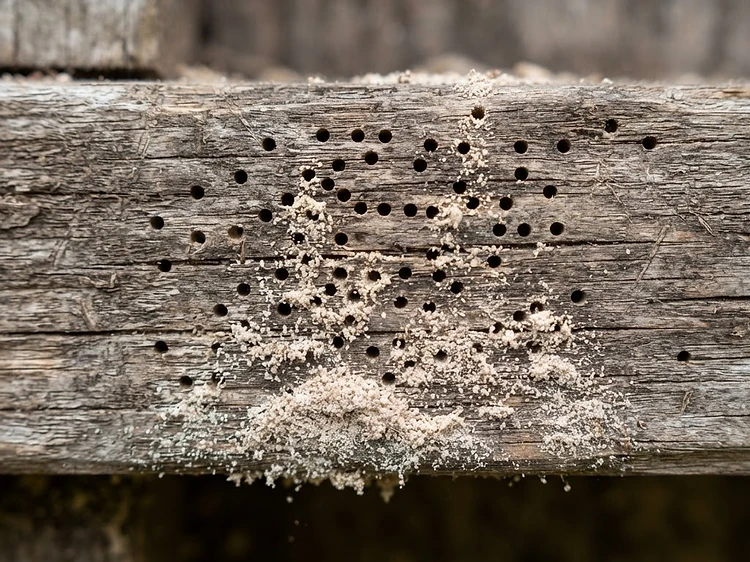
Signs You Have Timber Borers
- Small round exit holes (1–3mm) in timber surfaces
- Fine flour-like dust (frass) beneath holes or on the floor near timber
- Hollow-sounding timber when tapped
- Dead beetles found on windowsills near timber in spring and summer
- Crumbling or weakened timber at edges of floorboards, joists or furniture
Why Timber Borers Become a Problem
Some timber borers re-infest seasoned timber and can cause significant structural damage over years if left untreated, particularly to structural softwood framing, hardwood floorboards and joinery. Distinguishing between borer species is critical — some are harmless one-off invaders, while others require treatment.
Where We Commonly Find Them
- Structural timber — joists, bearers, beams
- Hardwood floorboards and parquetry
- Timber joinery, architraves and skirting
- Antique and second-hand furniture
- Roof void and subfloor timber
How We Inspect for Timber Borers
We identify the borer species from exit hole size, frass texture and timber type, assess whether the timber is structural or decorative, and determine whether the infestation is active (fresh frass, light-coloured wood in holes) or historical. Only active infestations of re-infesting species require treatment.
How Timber Borers Treatment Works
Treatment depends on the species and timber type. Surface-applied residual insecticide is used for accessible decorative timber and floorboards. Structural timber in subfloors may require borate treatment. Severely damaged structural timber requires replacement. We advise on the correct course for each situation.
Areas We Treat
- Accessible floorboards and joinery
- Subfloor timber and joists
- Roof void timber
- Decorative timber features
How Long Treatment Takes
A borer inspection and treatment takes 60–90 minutes depending on property size and timber accessibility. Surface treatment of accessible timber is completed on the day.
What to Do Before Treatment
Clear access to subfloor and roof void, remove rugs and furniture from affected floorboards where possible, and note any areas where you have seen frass or exit holes.
What to Do After Treatment
Do not wash treated timber surfaces for at least two weeks, ventilate treated areas, and avoid sealing or painting treated timber until the residual has fully penetrated.
When Follow-Up Treatment May Be Required
A follow-up inspection at 12 months is recommended to confirm the infestation is inactive and check for new exit holes, as borer life cycles span a year or more.
Timber Borers Treatment Cost
Timber borer treatment cost depends on the species, the extent of timber affected, and whether structural replacement is required. An inspection is recommended before quoting.
Prevention Advice
- Inspect second-hand timber, furniture and antiques before bringing them inside
- Ensure subfloor and roof void ventilation is adequate to reduce moisture
- Use treated or naturally resistant timber for structural construction
- Address moisture issues that attract moisture-loving borer species
- Have older homes inspected annually as part of a termite inspection
Why Choose Accurate Pest Control?
We are a licensed Newcastle pest control business with local expertise in timber borers treatment. We identify the species, tailor the treatment, and provide prevention advice to keep them from returning.
Timber Borers Control Across Newcastle & the Hunter
We provide timber borers treatment across Newcastle, Lake Macquarie and Port Stephens. View our service areas.