
Possums in the Roof: Why Exclusion Beats Removal
Thumping in the ceiling at night is usually a brushtail possum, and it is a protected animal that cannot simply be moved on. Here is how legal, humane exclusion actually works.
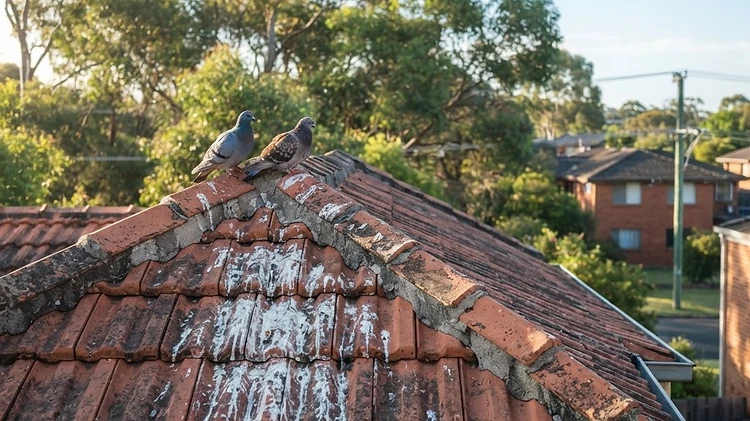
Key takeaways
- Possums are protected in NSW and must not be harmed; trapping and release are restricted by licence and distance rules.
- Heavy thumping, crashing and screeching at night point to a possum rather than rats or birds.
- Relocation rarely works because the animal returns or another takes the territory, so exclusion and proofing are the real fix.
- A one-way exit door left in place for seven to ten days lets the possum leave and blocks re-entry before permanent sealing.
- Dependants must be considered: exclusion is timed so a joey is not trapped inside.
A possum in the roof is one of the few pest problems where the obvious solution is the wrong one. Trapping and moving the animal is restricted by law, frequently ineffective, and leaves the actual problem — an open roof — exactly as it was.
The workable approach is exclusion: let the animal leave, make sure it cannot get back in, and give it somewhere better to go.
First, confirm it is a possum
The noise pattern is the strongest clue, and it is worth getting right before anything else.
- Possum. Heavy thumping, crashing and dragging across the ceiling, usually starting shortly after dusk and again before dawn. Loud screeching, hissing and fighting during breeding season. Occasionally a strong musky smell.
- Rats. Lighter, faster scurrying, often in the same direction along a run, sometimes during the day. Droppings in the roof void and around entry points.
- Mice. Very light scratching and rapid movement, frequently inside wall cavities as well as the ceiling.
- Birds. Fluttering, scratching near a nest site, chirping at dawn; starlings and sparrows in eaves and roof voids.
- Microbats. Fine, high-pitched chattering at dusk as they leave, and a concentration of droppings below a specific point. Bats are also protected and require a different approach again.
The two possum species in this region are the common brushtail, larger and heavier, and the ringtail, smaller and usually quieter, often nesting in dense garden shrubs as well as roofs.
Why the roof is attractive
A roof void is dry, warm, dark, free of most predators and, from a possum's point of view, an excellent substitute for a tree hollow. Older suburbs with mature trees and tiled roofs have the highest pressure because both the animals and the entry points are present.
Common entry points:
- Lifted or broken roof tiles, particularly on hips and valleys.
- Gaps in ridge capping and gable ends.
- Loose fascia boards and degraded barge boards.
- Broken or missing soffit and eave linings.
- Vents and whirlybirds without mesh.
- Gaps where a pergola, carport or extension meets the roof.
- Under solar panels, which has become one of the most common entries.
- Overhanging branches within about 1.5 metres of the roofline.
The legal position, briefly
Possums are protected native wildlife in NSW under the National Parks and Wildlife Act. They must not be harmed, poisoned or handled by unlicensed people, and trapping requires a licence with release restricted to within a short distance of the capture site — commonly 150 metres.
That has two practical consequences. First, DIY removal is not an option, and products sold to deter possums by harming them are both unlawful and cruel. Second, relocation as a strategy is essentially closed: the animal is going back into the same neighbourhood, often the same roof.
Why relocation does not work
Even where it is permitted, moving a possum out of a roof rarely solves anything for long.
- Possums are territorial and will attempt to return.
- A vacated roof void with an open entry is an advertised vacancy, and another possum will find it.
- Removing one animal does nothing about the entry point, the food source or the overhanging tree that made the roof accessible.
Exclusion does the opposite: it closes the access permanently and, over time, reduces the local pressure because the roof is no longer viable shelter.
How one-way exclusion works
The principle is simple. The possum must be able to leave, and unable to return.
- Inspection identifies every entry point and confirms possum activity, including whether dependant young are present.
- A one-way exit door is fitted over the main entry, so the animal can push out at dusk but cannot get back in.
- The door stays in place for seven to ten days, giving the possum time to leave at its own pace rather than being trapped or handled.
- Confirmation that the void is empty, by inspection and by the absence of noise.
- Permanent sealing of every entry point — tiles, ridge, fascia, soffit, vents and panel edges — using materials the animal cannot shift.
- A possum box is installed in a nearby tree or on the fence line, giving the animal alternative shelter and reducing the incentive to force a new entry.
Timing matters. Breeding seasons and the presence of a joey change when exclusion can proceed, and blocking a roof with an animal inside is both a welfare problem and potentially an offence. If a possum has been in the roof for months, there may also be a build-up of droppings and urine that needs cleaning and disinfection.
What the mess involves
A long-term possum tenancy leaves more than noise.
- Urine staining on ceiling plaster and cornices, which can be visible as brown rings.
- Droppings in the roof void, which break down into dust and should not be dry-swept.
- Compressed or torn insulation batts, reducing thermal performance.
- Chewed wiring, ducting and roof sarking, which is a genuine fire and water-ingress risk.
- A persistent odour, particularly in warm weather.
Cleaning and disinfection should be done with gloves and a mask, with droppings dampened before removal rather than swept dry. Any damaged insulation or wiring should be replaced or assessed by a licensed tradesperson.
Proofing the rest of the property
- Trim branches to at least 1.5 metres from the roof.
- Fit mesh over vents, whirlybirds and any open soffit.
- Seal gaps between roof and wall, gable ends and carport junctions.
- Mesh under solar panels, fitted so it does not void the panel warranty.
- Secure compost bins and remove fallen fruit rather than leaving it out.
- Do not feed possums. Feeding concentrates animals, encourages roof use and creates dependence.
- Net fruit trees rather than trying to keep possums out of the garden entirely.
- Keep pet food indoors overnight.
The aim is not to remove possums from the suburb. They are native, useful and protected. The aim is to make one building unavailable.
When it is not a possum
Persistent noise with no possum found should prompt a broader inspection. Rats and mice are common in the same voids and need a different program. Birds nesting in eaves are covered in our bird proofing guide. Microbats are protected and require specialist handling, and a snake in a roof void needs a licensed catcher rather than a pest controller.
Possums in a wall cavity, under the floor or in a shed
A roof void is the common case, but it is not the only one.
- Wall cavity. The hardest situation. One-way doors rarely work in a cavity with multiple openings, and the animal may be entering from the roof above. Access and inspection come first, and exclusion often means resolving the roof entry rather than the wall.
- Under the floor. Common in older homes with a subfloor and open vents. Exclusion needs mesh over vents and any gap at the base of the wall.
- Sheds, garages and carports. Usually straightforward. Secure the structure, remove accessible food and provide a box nearby.
- Solar panels. Increasingly common. Mesh skirts fitted around the array solve it without interfering with the mounting system.
The first night after the door is fitted
Expect noise. The possum will push at the door, and may be vocal about it, usually around dusk. That is the process working, not a failure.
- Do not seal the entry early, even if the noise stops. Seven to ten days is the point.
- Keep pets indoors at night so the animal is not blocked at the door by a dog.
- Leave a clear path from the roof to a tree or fence line, which reduces the incentive to force another entry.
- Check the door each morning for movement or damage.
- Note any secondary entry you notice while the process is running, and tell the technician before final sealing.
Possums, solar panels and wiring
A possum in a roof is not only a noise problem. Nest material accumulates, insulation compresses, and animals chew wiring, ducting and sarking. That is a genuine fire and water-ingress risk, and it is the reason a long-term tenancy is worth resolving rather than tolerating.
Under solar panels the same applies with an added cost: nests reduce airflow, trap debris and can affect performance, and the mess is difficult to clear without lifting panels. Roof cavity access should be checked at the same time as the array is proofed.
Living with possums without inviting them back
Possums are part of living in this region, and the goal is a building they cannot use rather than a suburb without possums.
- Plant or keep a mature tree with a naturally formed hollow, or install a possum box, well away from the roof line.
- Net fruit trees rather than leaving fruit to attract animals onto the roof.
- Secure compost and keep pet food indoors overnight.
- Prune overhanging branches every few years, not once. Regrowth reopens the path.
- Repair roof and eave damage promptly, before it becomes an entry.
- Do not feed possums, even casually. Feeding concentrates animals, encourages roof use and creates dependence on a food source that will not last.
What about the smell?
A roof void used for months will smell, particularly in warm weather, and the smell is usually urine soaked into plaster, insulation and timber rather than something a deodoriser can fix.
The sequence that works is removal, cleaning, disinfection and ventilation. Droppings are dampened before removal rather than swept dry, contaminated insulation is bagged and replaced, and stained plaster may need sealing or replacement. Where the staining has reached a ceiling, a painter is often needed once the pest work is finished.
What changes the price of possum exclusion
- How many entry points need sealing, and how high or awkward they are.
- Roof type and access: tiled, metal, flat or multi-storey.
- Whether the roof void needs sanitation because of accumulated droppings and urine.
- Whether a possum box is supplied and installed.
- Whether secondary issues, such as damaged insulation or wiring, need a licensed tradesperson.
- The follow-up visit to confirm exit and seal permanently.
Ask for the number of entry points in the quote. A price that does not state them is a price for the first entry only.
Possums in a strata or apartment building
In a townhouse or unit complex, the roof void is often continuous across several dwellings, and the entry may be three doors away from the noise.
- Report it to the owners corporation, who usually control the roof and common property.
- Ask for a building-wide inspection rather than a single-unit fix, because sealing one section pushes the animal into the next.
- Check balconies and ledges as well as the roof, particularly in older blocks with open eaves.
- Where a body corporate is slow to act, keep photographs and dates; the noise and hygiene issue is a maintenance matter, not a private dispute.
Children, pets and droppings
Possum droppings in a roof void or on a balcony are a hygiene issue, not a curiosity. Keep children away from affected areas, wash hands after any contact, and do not let dogs investigate droppings during the exclusion period.
Cleaning is done with gloves, and droppings are dampened before removal. Dust from dried droppings should not be inhaled, and any area used by an animal for months should be disinfected rather than simply swept.
If someone in the household develops a persistent cough or rash after work in a contaminated roof void, mention the exposure to a doctor.
How Accurate Pest Control can assist
We confirm the animal, assess for dependants, install one-way exclusion, permanently seal entry points and fit a possum box so the outcome holds.
- Possums — species, signs and exclusion detail
- Rodents — if the noise is lighter and more constant
- Bird proofing — birds and mites in the same voids
- Get a free quote
Frequently asked questions
Written by
Gary Paras
Founder & Senior Pest Management Technician
Gary Paras is the founder of Accurate Pest Control and leads its termite and building inspection work across Newcastle, Lake Macquarie, Port Stephens, Maitland, the Hunter Valley and the Central Coast. Over more than 20 years he has inspected thousands of Hunter homes, from lakeside cottages and coal-town miners' cottages to new-estate slab homes, and specialises in diagnosing termite activity before it reaches structural timber. He writes the practical pest guidance published here, based on what he and his technicians actually find on site rather than generic advice.
- NSW Pest Management Licence 5080776
- Building Consultant Licence BC499
- Fully Insured Public Liability
- 20+ Years Experience — founded 2005
Keep reading


Fleas in the House: Why One Treatment Rarely Ends the Problem
30 October 2026
Read article

Silverfish: Damp, Paper and the Slow Damage in the Dark
30 October 2026
Read article

Bed Bugs: How to Confirm Them, Prepare Properly and Clear Them
30 October 2026
Read article