
Food Manufacturing Pest Control: Zones, Monitoring and Audit Evidence
In a food facility pest control is an audited prerequisite program, not maintenance. The zones that drive findings, how monitoring and trending work, and what auditors ask for.
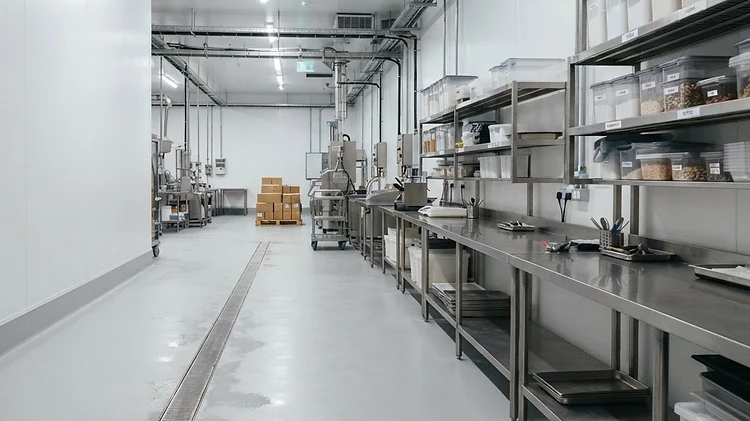
Key takeaways
- Audit findings cluster in five or six zones: receival, dry store, wet floor, packaging, waste and amenities.
- Numbered monitoring points with counts per visit turn a service into an evidenced trend report.
- Proofing doors, docks, screens and penetrations does more than any product applied indoors.
- No fogging or residual spraying during production; gel baiting, sealed stations, dusting and trapping are the workhorses.
- The corrective action log is the section auditors ask for first.
In a food manufacturing facility, pest control is not a maintenance task. It is a prerequisite program, and it is audited like one. A single rodent in a dry store or a cockroach in a packaging area is not a nuisance — it is a potential recall, a customer complaint, a failed audit and a very expensive fortnight.
That changes the shape of the work: documented, monitored, trended, and scheduled around production rather than around convenience.
Why food manufacturing is different
- Product exposure. Anything applied indoors must be compatible with food contact surfaces, and nothing may be sprayed near exposed product.
- Audit obligation. HACCP-based programs, FSANZ requirements and customer standards all expect a documented pest management program with monitoring and corrective actions.
- Traceability. If a pest is found in finished product, the investigation starts with the monitoring records — which is why a station map and trend history matter.
- Continuous operation. Production rarely stops for a treatment, so the program runs in the gaps: changeovers, shutdowns, night shifts.
- Contractors on site. Technicians need induction, GMP clothing, boot and hand hygiene, and awareness of allergen controls.
The zones that decide the program
In most facilities, audit findings cluster in five or six areas rather than across the whole building.
- Receival dock and roller doors — pallets arrive with pests on them, and the door stays open for minutes at a time.
- Dry store and ingredient bins — stored product moths and beetles establish here and seed the production hall.
- Wet processing floor and drains — food residue, standing water and warm drains breed flies and support German cockroaches.
- Packaging and finished goods stores — cardboard, shrink wrap and quiet corners.
- Waste, compactor and bin wash — the pressure point for rodents and flies, and often excluded from the program.
- Amenities — locker rooms and lunchrooms bring food, water and warmth to the edge of production.


The pests that matter most
- Rodents — roof voids, wall cavities, dry store, dock levellers and waste areas. They are the priority audit finding.
- German cockroaches — warm equipment motors, control panels, underneath stainless benches, in floor drain surrounds.
- Stored product moths and beetles — ingredient bins, bagged flour and grain, forgotten pallet corners.
- Flies — waste, drains, and open doors; a food safety indicator as well as a nuisance.
- Birds — roof areas, loading canopies and gutters; droppings create contamination and mite problems.
- Ants — trailing into ingredient stores and along service conduits.
Monitoring, trending and action thresholds
A program without counts is a program without evidence. Every outside station, internal monitor and insect light trap should be numbered on a floor plan, inspected on the same cycle, and recorded with a count per point.
That gives the site three things: a trend line that shows whether pressure is rising before it becomes a finding, a threshold that triggers action, and a report that answers an auditor's question in one page rather than an afternoon.
Proofing is half the program
Doors, screens, air curtains, penetrations, dock seals and roof vents do more for a facility than any product. Where those fail, the treatment simply repeats.
The practical sequence for most sites: seal the dock, repair door seals that no longer meet the floor, screen the windows that open, seal conduits through walls, and check that the roof and wall junctions are intact. Then the treatment holds.
The sanitation interface
Pest control and cleaning are the same conversation in a food facility. Where cleaning stops, pests begin — and a technician can only work with the state of the plant in front of them.
- Dry clean before wet clean in dry areas — hosing pushes flour into cracks and creates a food source.
- Clean under and behind fixed equipment on a scheduled basis, not on a shutdown-only basis.
- Empty waste before the end of each shift; a full bin overnight is a night's worth of feeding.
- Keep ingredient spills cleaned immediately; a pallet of spilled flour is a stored product pest nursery.
Chemical constraints in a production environment
- No fogging or space spraying during production, and no residual applied to food contact surfaces.
- Prefer gel baiting, sealed stations, dusting of voids and trapping, with products chosen for the setting.
- Records must show product, rate and location for every application, with the safety data sheet on site.
- Re-entry times must fit the production schedule, not the other way around.
Documentation that survives an audit
Keep one file per site: the pest management plan, the monitoring map, each service report with findings, the corrective action log with evidence of closure, the chemical register, and the licences. The corrective action log is what auditors ask for first, because it shows whether findings actually get fixed.
What goes wrong, repeatedly
- Monitoring stations installed but never counted, so the trend report is meaningless
- Waste and compactor areas excluded from the plan
- Dock doors left open through the shift
- Corrective actions listed but never assigned to a person
- Pest contractor isolated from the quality team, discovering problems the site already knew about
Working with the quality team, not around it
The best-performing programs are the ones where the pest technician and the quality manager talk monthly, not just when something is found.
Practical rhythm: the technician reviews the previous month's trend before servicing, the quality team reviews the report within two working days, and any trend increase becomes an agenda item with an owner and a date. When a pest finding is treated as a quality finding rather than a contractor problem, it gets fixed.
Seasonal pressure in the Hunter
Summer raises fly and cockroach pressure and pushes rodents toward cool, food-bearing buildings. Autumn and winter are when rodents move indoors in numbers and when roof voids get used. Stored product pressure runs year-round but spikes when ingredient stock sits longer than expected.
Planning the site's shutdown work around that calendar — void dusting in winter, drain and fly management before summer — is cheaper than reacting in the middle of peak production.
How Accurate Pest Control can assist
We build documented programs for food manufacturers and processors across Newcastle and the Hunter, with numbered monitoring, trend reporting, audited documentation and technicians inducted to your site requirements.
Frequently asked questions
Written by
Gary Paras
Founder & Senior Pest Management Technician
Gary Paras is the founder of Accurate Pest Control and leads its termite and building inspection work across Newcastle, Lake Macquarie, Port Stephens, Maitland, the Hunter Valley and the Central Coast. Over more than 20 years he has inspected thousands of Hunter homes, from lakeside cottages and coal-town miners' cottages to new-estate slab homes, and specialises in diagnosing termite activity before it reaches structural timber. He writes the practical pest guidance published here, based on what he and his technicians actually find on site rather than generic advice.
- NSW Pest Management Licence 5080776
- Building Consultant Licence BC499
- Fully Insured Public Liability
- 20+ Years Experience — founded 2005
Keep reading

Pesticide Legislation in NSW: Licensing, Labels and Records Explained
29 October 2026
Read article

Hotel and Motel Pest Control: Housekeeping as the Early Warning System
29 October 2026
Read article

Pest Control Certification in NSW: What to Check Before You Book
29 October 2026
Read article