
Hotel and Motel Pest Control: Housekeeping as the Early Warning System
Luggage brings bed bugs, corridors carry trays, and guests don't report. How accommodation properties find problems at one room instead of in a review.
Key takeaways
- Luggage is how bed bugs travel, so guest rooms carry a risk no other building type has.
- Housekeeping is the early warning system — trained to report with a photo, and empowered to pull a room.
- The bed bug protocol starts with taking the room out of service, not moving the guest next door.
- Spare furniture and linen stores move pests between rooms faster than guests do.
- Written room clearance records are what protect a property if a guest raises it weeks later.
A hotel or motel has a pest problem every other building type does not: hundreds of people a week arrive with luggage, and luggage is how bed bugs travel. Add round-the-clock operation, a commercial kitchen, a laundry running seven days and short-stay guests who do not report things the way a homeowner would, and the risk profile is unlike any other property.
The good news is that accommodation rewards routine. The properties that avoid incidents are not the ones with the strongest chemicals; they are the ones where housekeeping is the early warning system and the response when something is found is already written down.
Why accommodation is different
- Guest turnover. A room may host four different households in a week, each bringing bags, shoes and bedding.
- Guests don't report. People are embarrassed, in a hurry, or assume someone else has noticed.
- Reputation compounds. A review mentioning bites is read by thousands of prospective guests before a single complaint reaches the front desk.
- Operation never stops. There is no convenient closed window — the work happens between check-out and check-in, or overnight.
- Food moves through the building. Breakfast rooms, minibars, room service trays left in corridors and staff meals all create food sources outside the kitchen.
Where the risk concentrates
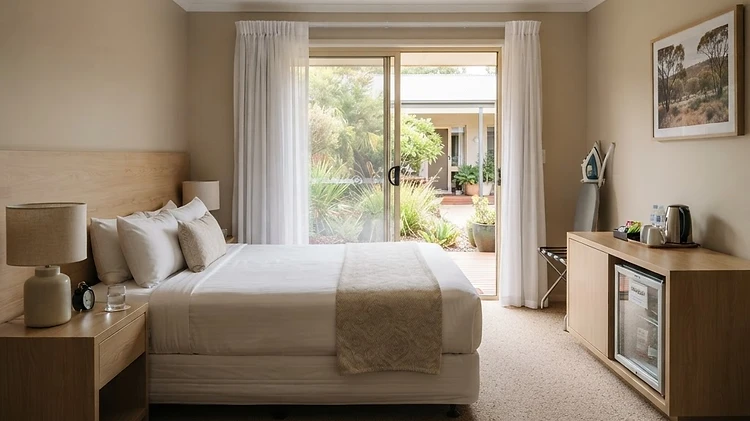
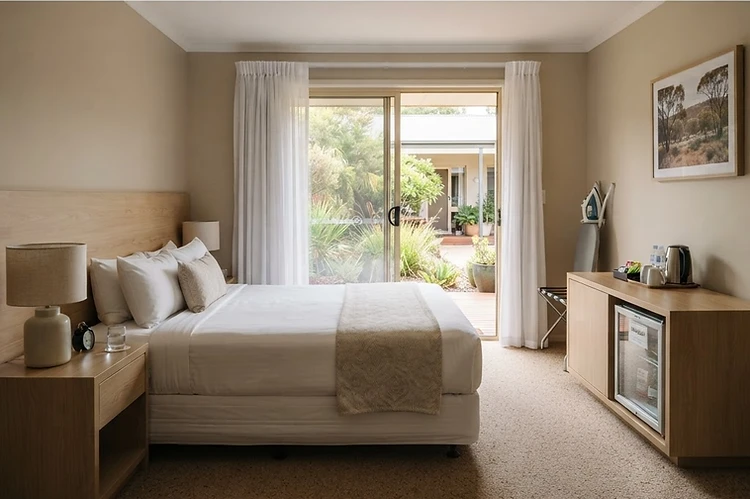
Guest rooms. Bed bugs in seams, headboards, bed frames, skirting and luggage racks. Carpet beetles and clothes moths in wool carpets, curtains and stored bedding. Cockroaches behind the bar fridge, kettle station and in the wardrobe cavity. Ants entering at sliding doors and around air-conditioning units.
Housekeeping and linen stores. Trolleys, spare linen and stored furniture move pests between rooms faster than any guest can. A mattress parked in a corridor is an exposure.
Kitchen, bar and breakfast room. The strongest cockroach and rodent pressure in the building. Warm equipment motors, under-bench voids, grease, and bins left overnight.
Laundry. Heat, moisture and constant traffic. Damp harbourage behind and under machines, and lint accumulation in ducts.
Back of house and dock. Deliveries, compactor, cardboard and a door that stays open while trolleys come through.
Grounds and car park. Planter boxes against the wall, external lighting at doorways, bins and perimeter planting bring rodents, ants and mosquitoes to the building.

Housekeeping is the early warning system
The single most effective change a property can make is teaching housekeeping what to report and giving them a ten-second way to report it.
- What to look for: live insects, dark specks along a mattress seam, small blood spots on linen, droppings in a drawer, gnaw marks, live or dead cockroaches behind the kettle, ants on the window sill.
- How to report: a photo and the room number, sent to a manager immediately — not noted at the end of the shift.
- What happens next: the room is taken out of service until it is inspected, and the adjoining rooms are checked the same day.
Properties that do this find problems at the one-room stage. Properties that don't find them in a review.
The bed bug protocol
Bed bugs need a written protocol, because the first two hours decide whether it is one room or six.
- Remove the room from service immediately. Do not move the guest along the corridor into an adjoining room; that is how an infestation travels.
- Bag the linen and do not send it down the chute or into the general wash. Isolate and launder hot.
- Inspect the room and the two rooms either side, plus the rooms above and below where the building allows.
- Treat with a proper program — residual and/or dust to seams, frames and voids, with a follow-up visit at around two weeks.
- Return the room to service only after the follow-up inspection clears it.
- Record it: date, room, action, clearance. That record protects the property if a guest raises it later.
The same discipline applies to a report received after check-out: inspect the room before it is re-let.
Kitchen, bar and food service
- Bins emptied before close; overnight trays cleared from corridors, not left until morning.
- Under-bench voids and equipment motors cleaned on a schedule and checked each service.
- Gel baiting in harbourages rather than spraying around food areas.
- Deliveries checked at the dock; cardboard removed the same day rather than stored behind the kitchen.
- Grease trap and drain maintenance on a calendar, because drains are the fly and cockroach reservoir.
Laundry and linen
- Keep linen off the floor and in closed trolleys; a bag left open in a corridor is an invitation.
- Store spare bedding sealed, and rotate stock so nothing sits undisturbed for a season.
- Check behind machines for damp, and clear lint from ducts — it is both a fire and a harbourage issue.
- Wash on the hottest cycle the fabric allows for anything from a flagged room.
Storage, refits and spare furniture
Old furniture, spare mattresses, and the contents of a room under renovation are the most common source of a "new" infestation in a building that was clean last month. Store these items sealed, off the floor, in one designated area that is inspected — never in a disused room that nobody opens for months.
Refurbishments should include a pest check before soft furnishings go back in, especially if the room had a previous issue.
Common areas, pool and car park
Guests judge the property outside the room as well. Ants trailing across a lobby threshold, cockroaches around a pool storage shed, rodent burrows in garden beds, and mosquitoes breeding in a pool pump pit or a forgotten bucket all generate the same review.
Practical measures: keep planter boxes off the building wall, keep bins lidded and emptied, reduce external lighting immediately at doorway thresholds, and check the pool area and pump room weekly in summer.
The paper trail
Keep one file: the service schedule, reports per visit, the bed bug protocol with room clearance records, chemical records and safety data sheets, and corrective actions with owners.
This matters for three reasons — it shows a program rather than a reaction, it supports a claim if a guest raises something weeks later, and it is what a franchisor, insurer or auditor will ask for.
What goes wrong, repeatedly
- Housekeeping not trained or not empowered to report
- A reported room returned to service without a follow-up inspection
- Rooms treated but adjoining rooms never checked
- Linen stores and spare furniture that nobody has opened in months
- Corridor trays left overnight, every night
- No record of what was done, so a later complaint cannot be answered
Franchise standards and brand audits
If the property flies a brand flag, the pest program is audited against a standard rather than judged on impressions. Those audits consistently look for the same things.
- A current site plan showing monitoring locations and room numbers
- Service reports for every scheduled visit, signed
- A written bed bug protocol with evidence of training and a record of any incident
- Chemical records: product used, rate, area treated, technician, licence details, safety data sheets on site
- Corrective actions with a name against each and a date closed
- Proofing recommendations and their status
The pattern is always the same: the properties that struggle are the ones pulling records together the week before the audit. A program that files as it goes has nothing to prepare.
Short-stay and serviced accommodation
Holiday houses, serviced apartments and Airbnb-style properties sit between a home and a hotel. The guests change weekly, cleaning is often contracted, and there is no maintenance team on site to notice a gnawed door or a gap under a screen.
The practical risks are predictable: bed bugs from luggage, cockroaches in a kitchen that is cleaned by whoever is rostered, ants entering around a leaking tap, and rodents in a garage or laundry that nobody opens between stays.
A sensible minimum program is an annual general treatment plus a per-changeover check of beds, skirting and the kitchen, with a standing arrangement to inspect within 24 hours of any guest report. Owners who manage several properties should keep one record per address, so a repeat report is visible as a pattern rather than a surprise.
The accommodation calendar
Accommodation runs on a different seasonal clock to residential work, because occupancy drives the pressure.
- Spring: bed bug and fabric pest season begins as travel picks up; check stored bedding and curtain linings before the peak.
- Summer: the highest occupancy and the highest food and beverage volume. Cockroach and fly pressure peaks in kitchens, bars and waste areas; mosquitoes and ants around pool decks and garden beds.
- Autumn: rodents move toward buildings as nights cool; dock and plant room checks become priority.
- Winter: the quietest trading period and therefore the best window for deep cleaning behind equipment, laundry duct work, store room rationalisation and proofing jobs that would otherwise disrupt guests.
Booking the disruption-prone work into winter is the single easiest scheduling win in the sector.
Working discreetly
Guests notice vans, uniforms and equipment. Three habits keep the work invisible:
- Unmarked or plain vehicles parked away from the porte-cochère
- Back-of-house access and service lifts, never through the lobby
- No visible stations, bait or equipment in guest areas, and treated rooms closed until dry and clear
For room-level work, the front office needs one person who knows the schedule and can block the room. Without that, a technician arrives to find the room occupied and the visit is wasted.
What a useful report looks like for a hotel
A report that says "treated kitchen and rooms, no activity" tells a duty manager nothing. What managers can act on:
- Findings by zone, with room numbers where relevant
- A count against the previous visit, so a trend is visible
- Photographs of anything that needs a maintenance fix
- Named corrective actions, with the department responsible
- A clear next-visit date and what will be checked
That is also the document that answers a guest complaint three weeks later, which is why it should be filed by date and room rather than in a folder nobody opens.
Common questions from accommodation operators
Can we treat an occupied room? Generally yes for crack and crevice work, but bed bug treatments and anything with residual wet product require the room to be out of service. Guests should never be moved into an adjacent room during a bed bug response.
How often should rooms be inspected? Every service for a sample, and every changeover for the visual check that housekeeping already performs. Full room-by-room inspection is usually reserved for high-risk rooms, long-stay rooms and any room with a previous history.
Do we need to tell guests? Follow the property's own policy and any franchisor requirement. What is not optional is having a written protocol that says who decides, who communicates, and what is offered.
Is one annual treatment enough? No. Accommodation is a monthly-minimum environment because of turnover, food service and the cost of a single bad review.
A note on contractors and guest confidentiality
Accommodation providers sometimes hesitate to book pest work because of what a guest might see. The practical answer is a written schedule and a single point of contact: rooms blocked in advance, work done between check-out and check-in, plain vehicles, and no branded signage in guest areas. Confidentiality is a scheduling problem, not a reason to delay the work.
How Accurate Pest Control can assist
We service hotels, motels and short-stay properties across Newcastle and the Hunter, with room-by-room programs, written bed bug protocols, discreet after-hours access and documentation suited to franchisors and insurers.
Frequently asked questions
Written by
Gary Paras
Founder & Senior Pest Management Technician
Gary Paras is the founder of Accurate Pest Control and leads its termite and building inspection work across Newcastle, Lake Macquarie, Port Stephens, Maitland, the Hunter Valley and the Central Coast. Over more than 20 years he has inspected thousands of Hunter homes, from lakeside cottages and coal-town miners' cottages to new-estate slab homes, and specialises in diagnosing termite activity before it reaches structural timber. He writes the practical pest guidance published here, based on what he and his technicians actually find on site rather than generic advice.
- NSW Pest Management Licence 5080776
- Building Consultant Licence BC499
- Fully Insured Public Liability
- 20+ Years Experience — founded 2005
Keep reading


Food Manufacturing Pest Control: Zones, Monitoring and Audit Evidence
29 October 2026
Read article
Pesticide Legislation in NSW: Licensing, Labels and Records Explained
29 October 2026
Read article

Pest Control Certification in NSW: What to Check Before You Book
29 October 2026
Read article