
Fleas, Bed Bugs, Silverfish and Six Other Household Pests People Misidentify
The bites are rarely bed bugs, the moths are usually carpet beetles, and silverfish are a moisture problem in disguise. Identification, life cycles and what each pest actually needs.
Key takeaways
- Flea treatments fail because pupae survive in carpet — vacuums, growth regulators and a follow-up visit are essential.
- Bed bugs are a hitchhiker pest, not a hygiene problem; do not move rooms before the inspection.
- Silverfish signal humidity, so the fix is ventilation and leak repair rather than another spray.
- Washing woollens before storage is the single most effective defence against carpet beetles and clothes moths.
- Bird mites appear indoors after a nest is removed or vacated — the nest material is the treatment target.
Half the pest identification calls we take end with a correction: the bites are not bed bugs, the "moths" are carpet beetles, and the "cockroach droppings" are silverfish frass. Identifying the pest correctly is the difference between a treatment that works and a fortnight of wasted effort.
Here are the household pests most often misdiagnosed, what they actually are, and what each one needs.
Fleas: the pupae are the problem
Flea bites cluster around ankles and appear as small red spots, often in a line. The insects are 2–3mm, dark, and jump rather than fly.
The reason flea treatments "fail" is the life cycle: eggs, larvae, pupae and adults. Pupae in carpet and bedding can survive for months and are resistant to most products. That is why the plan is:
- Treat the pets — all of them, on the same day, with a vet-recommended product
- Vacuum thoroughly every day for two weeks, and dispose of the bag or empty the canister outside
- Wash bedding on the hottest cycle the fabric allows
- Use an insect growth regulator as well as an adulticide, so the cycle is broken rather than just the adults killed
- Expect a second visit: pupae emerging after the first treatment are normal, not a failure
If the pets have been treated and fleas persist, the source may be a possum or bird nest in the roof or under the house — and that has to be removed.
Bed bugs: not a hygiene problem
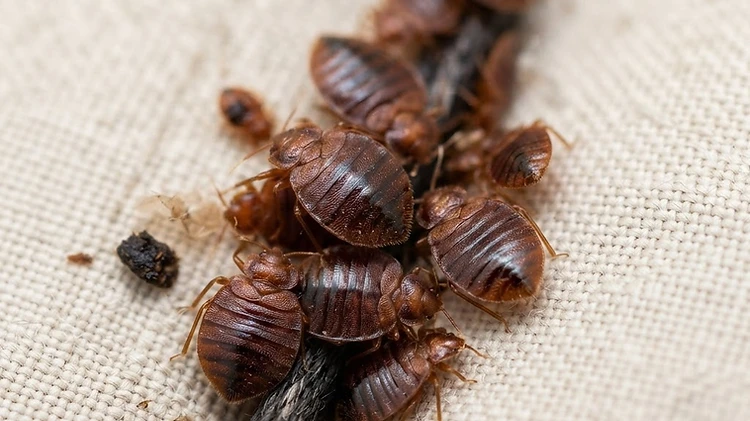
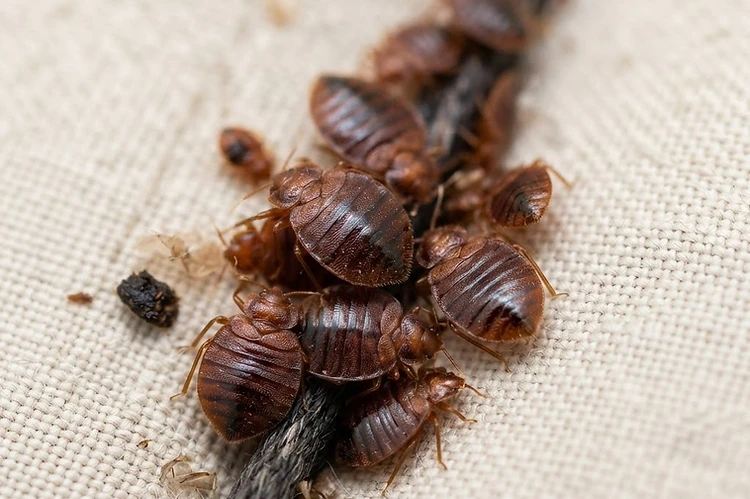
Bed bugs are 4–5mm, flat, oval, reddish-brown, and hide in seams, bed frames, behind skirting and in the folds of curtains. Bites are usually in lines on exposed skin, often on the face, arms and shoulders, and they itch intensely.
Two things matter:
- Do not move to another room. Bed bugs spread with luggage, bedding and furniture — moving them around the house is how one room becomes four.
- Preparation is the treatment. Everything washable gets washed hot and bagged, the room is cleared enough to access seams and edges, and clutter under the bed is removed. A treatment in a cluttered room will not work.
Treatment involves a thorough inspection, a residual and often a dust in voids and frames, with a follow-up at around two weeks. Do not throw out the mattress before the inspection — the inspector needs to see where they are.
Silverfish: a moisture problem wearing a pest costume
Silverfish are silvery, teardrop-shaped, 12–15mm, fast, and love damp paper, cardboard and starch. They are a symptom of humidity — in a roof space, a bathroom, a laundry, a cupboard against a wet wall, or a subfloor with poor ventilation.
Spraying silverfish without fixing the moisture produces a repeat call every season. The fix is ventilation, leak repair, dehumidifying, and getting cardboard out of damp storage. The treatment is a residual or dust in the harbourages, which is short work once the moisture is addressed.
Carpet beetles and clothes moths: wool, not food
Carpet beetles leave larvae that eat wool, silk, fur, feathers and dried pet food. The adults are small, mottled and often found on window sills. Clothes moths leave webbing or cases in stored woollens and are drawn to undisturbed, dark storage.
- Wash or dry-clean woollens before storing, and store them clean — perspiration and food traces are what larvae eat
- Use sealed bags or containers rather than open drawers for seasonal items
- Vacuum under beds, along skirtings and inside wardrobes, including the corners
- Treat the harbourages: under carpet edges, in wardrobe corners, under furniture that never moves
- Check the roof void insulation for carpet beetle activity, particularly in older homes
Stored product pests: the pantry is a system
Weevils, Indian meal moths, flour beetles and their relatives arrive in packaged food and spread through an unsealed pantry.
- Empty the pantry completely and inspect every opened packet — discard infested items in an outside bin
- Wipe shelves with hot soapy water, including the back corners and the shelf edges
- Store flour, rice, cereals, nuts and pet food in airtight containers
- Freeze suspect dry goods for 48 hours before storing
- Check the pet food bin — it is the most commonly missed source
Pheromone traps help monitor moth activity after the clean-out, but they do not replace removing the infested product.
Birds, possums and bird mites
Possums are protected in NSW and cannot be trapped and relocated by a homeowner. The workable approach is exclusion: identify the entry, fit a one-way door so the animal can leave without returning, then seal the entry after it has gone. If a joey is present, this needs care and a licensed handler.
Birds nesting in roof spaces, solar arrays and eaves create mess, block gutters and carry mites. Netting and proofing is the durable solution; removing nests during the season is a welfare issue and often illegal for native species.
Bird mites appear indoors after a nest is vacated or removed — tiny specks that bite and leave itchy welts, particularly around windows and ceiling cornices. Treatment means finding and removing the nest material, then treating the harbourage and the room edges.
Timber borers: furniture versus structure
Lyctus borers attack newly milled hardwood with high starch — furniture, flooring, architraves — and leave fine sawdust. Anobium (furniture beetle) is common in older European furniture and structural timber.
Borers in furniture are often treated by treating the item; borers in structural timber need identification and, sometimes, replacement. Frass appearing under a piece of furniture every week is a reason to inspect, not to reach for a spray can.
Five rules for a treated home with kids and pets
Products are chosen to be low-risk when used as directed. Placement and drying time do most of the work.
- 1Clear the zone before the technician arrives
Toys, bedding, pet bowls, food and floor rugs off the floor and benches. Anything not cleared is usually not treated.
- 2Leave for the stated re-entry period
One to two hours for a general treatment once surfaces are dry, two to four hours for a flea or carpet treatment. The clock starts when the technician finishes.
- 3Treat dry as clean
Keep bare feet, paws and toddlers off treated surfaces until they are visibly dry. Then ventilate for twenty minutes.
- 4Move the aquatic and small animals completely
Fish tanks, bird cages and reptile enclosures: cover, aerate and shift out of the treated room. Pyrethroid-based products are highly toxic to fish and aquatic invertebrates.
- 5Secure every bait and station
Rodent baits in locked stations, cockroach gel in cracks rather than on open surfaces, and no baits where a dog or child can reach them.

Identify before you treat
Most of these pests are treated differently from each other, and several are treated differently again depending on where they are. A photograph, the location, and the evidence left behind (droppings, frass, webbing, casings) will usually identify the pest faster than any product will solve it.
Our pest identification tool scores what you are seeing, and if it is ambiguous, send a photo — it is quicker than guessing.
Cockroach nymphs or bed bugs? The mix-up that costs money
Both are small, brown and found in bedrooms, and both cause people to spend money on the wrong treatment.
Cockroach nymphs have antennae that are visibly long relative to the body, legs that spread outward, and they move quickly when a light comes on. Bed bug nymphs are flatter, more oval, have no long antennae in proportion, and move slowly. The practical tell is location and behaviour: cockroach nymphs are where there is moisture and food residue, usually a bedside water glass, a wall socket, a bed frame near a bathroom, and they scurry. Bed bugs are where a person slept and stay close to the bed frame, seams and headboard without running.
The other difference is evidence. Bed bugs leave dark faecal spots along seams and a moulted skin that is translucent and papery. Cockroaches leave smear marks and droppings that look like ground pepper or dark specks with ridged edges.
Getting this wrong means paying for a chemical treatment in the wrong room and continuing to be bitten — or continuing to see insects and concluding the treatment failed.
Itchy bites with nothing to find
This is the hardest category and it deserves a straight answer. Some people genuinely react to bites from insects that are difficult to find: bird mites after a nest on the roof, rodent mites, or biting midges at certain times of year. Others have a skin condition, an allergic reaction, scabies, or a stress response, and no amount of spraying will resolve it.
Our approach is diagnostic and honest. We look for the sources that produce invisible biting: nests in the roof void or eaves, birds roosting on a balcony, rodents in a wall, a damp subfloor. If those exist, treating the source resolves the bites, often within a week. If nothing exists after a genuine search, we say so, and we suggest a GP or dermatologist rather than selling repeated treatments. A pest controller who keeps treating a house with no pest is not solving a problem.
If you have bites, keep a simple record: dates, times, rooms and where on the body. It is more diagnostic than any spray.
Droppings: identifying the species from the evidence
Droppings are the most useful piece of physical evidence available, and most people read them wrong.
Rodent droppings are blunt-ended and capsule-shaped, dark, and scattered along walls and in corners rather than in the middle of a room. Rat droppings are noticeably larger than mouse droppings and often found near water. Cockroach droppings are smaller, cylindrical with ridged sides and blunt ends, and are usually concentrated near harbourage rather than spread widely. Gecko and skink droppings are the ones that cause the most panic: they are dark with a distinct white tip, because reptiles excrete uric acid separately. They are found on windowsills, in garages and along skirtings, and they mean a lizard, not an infestation.
Photograph what you find with something for scale, and keep it. It saves a visit, and it prevents the wrong treatment.
Damaged timber: three very different causes
Timber damage at home most often comes from one of three things, and only one is a structural emergency.
Furniture beetle and borer damage appears as small, round flight holes with fine dust beneath, typically in older pine furniture, floorboards or joinery. Termite damage is more often a hollowed-out section with no sawdust, because termites eat the timber rather than tunnel through it, and there is usually mud packing or a shelter tube nearby. Moisture decay, which people routinely misdiagnose as pest damage, is soft, dark and often fungal, and it appears where water has been reaching timber for a long time.
The distinction matters because the treatments are entirely different, and because moisture decay of a bearer is a structural issue that a pest treatment will not fix. If the timber is soft to a fingernail, the first call is to a builder, not to us.
Building the evidence file before you call
A short, cheap habit makes every identification faster and every quote more accurate. Keep a single note on your phone with dates, the room, what you saw, what you did, and a photograph with scale.
Include the conditions: has it rained, has a nest appeared on the roof, has a new pet arrived, have you moved furniture, has a renovation just finished. Pests respond to changes, and the change is often the clue.
Send that file when you request a quote.
When to stop guessing and get a second look
If you have treated, and treated again, and the same thing keeps appearing, the diagnosis is wrong. That is the point to stop spending and get a fresh set of eyes.
Repeated treatment of an unidentified pest is the most common waste of money we see. The pattern looks like this: a spray in the kitchen, a spray a month later, a fogging, a new product from the hardware store, and then a call to us describing an insect nobody has been able to name. Almost always the actual source was a harbourage that was never located — a wall cavity, a roof void, a shared riser, a nest in the eaves — or the pest was never an insect at all.
A one-hour inspection costs less than two wasted treatments, and it either gives you a species and a plan, or tells you honestly that the problem is not a pest problem.
How Accurate Pest Control can assist
We identify species before recommending anything, explain what the treatment involves, and tell you honestly when the fix is ventilation or housekeeping rather than a chemical.
Frequently asked questions
Written by
Gary Paras
Founder & Senior Pest Management Technician
Gary Paras is the founder of Accurate Pest Control and leads its termite and building inspection work across Newcastle, Lake Macquarie, Port Stephens, Maitland, the Hunter Valley and the Central Coast. Over more than 20 years he has inspected thousands of Hunter homes, from lakeside cottages and coal-town miners' cottages to new-estate slab homes, and specialises in diagnosing termite activity before it reaches structural timber. He writes the practical pest guidance published here, based on what he and his technicians actually find on site rather than generic advice.
- NSW Pest Management Licence 5080776
- Building Consultant Licence BC499
- Fully Insured Public Liability
- 20+ Years Experience — founded 2005
Keep reading


Fleas in the House: Why One Treatment Rarely Ends the Problem
30 October 2026
Read article

Silverfish: Damp, Paper and the Slow Damage in the Dark
30 October 2026
Read article

Bed Bugs: How to Confirm Them, Prepare Properly and Clear Them
30 October 2026
Read article